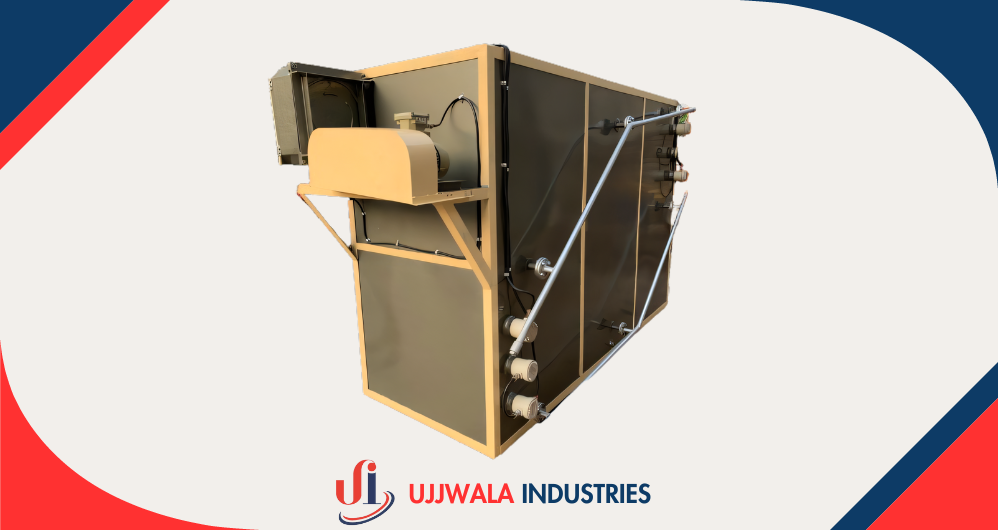

Steam Tray Dryer

Use Of Product / Advantages

Efficient Heat Transfer: Steam provides efficient and uniform heat transfer, ensuring effective drying of materials on the trays. This results in consistent product quality.

Versatility: Steam tray dryers are versatile and can be used for drying a wide range of materials, including pharmaceuticals, chemicals, food products, and more.

Gentle Drying Process: The use of steam as a heating medium often results in a gentle drying process, making steam tray dryers suitable for heat-sensitive materials, including pharmaceuticals and certain food products.

Precise Temperature Control: Steam tray dryers typically come with precise temperature control mechanisms. This allows operators to maintain the desired temperature within the drying chamber, ensuring optimal drying conditions.

Energy Efficiency: Steam tray dryers are often considered energy-efficient because steam is a readily available and cost-effective energy source. Additionally, the efficient heat transfer minimizes energy wastage.

Hygienic Design: The use of stainless steel in the construction of steam tray dryers ensures a hygienic environment. Stainless steel is easy to clean, corrosion-resistant, and suitable for applications in industries like pharmaceuticals and food processing.

Cost-Effective: The efficiency and reliability of steam tray dryers can contribute to cost-effectiveness over the long term, considering factors such as energy efficiency and reduced maintenance requirements.

Reduced Risk of Overheating: Steam provides controlled and even heat distribution, reducing the risk of overheating or burning of materials. This is particularly important for heat-sensitive products

Scalability: Steam tray dryers can be designed for various capacities, making them suitable for both small-scale and large-scale production processes.

Wide Temperature Range: Steam can be utilized over a broad temperature range, allowing for flexibility in drying different types of materials.

Applications

Tray Dryers are ideally suitable for drying chilies, spices, potato chips, onions, fish, garlic, grapes, cashew nuts, pistachio nuts , makhana, areca nut , coconut, roots , walnuts ,Fig , Ginger, Spice, etc. It is also for used for drying pharmaceuticals, chemicals, powders, granules, plastic granules etc. Heating is either by electric or steam or both combined. Various models are listed in this leaflet to suit customer requirements. Custom built models can be quoted on request.

Features

Trays: These are the horizontal surfaces inside the dryer where the material to be dried is placed. Trays are usually made of stainless steel to withstand the conditions inside the dryer.

Steam Coils or Heat Exchangers: Steam coils or heat exchangers are responsible for converting steam into heat. Steam is passed through these coils, and the heat generated is transferred to the trays, facilitating the drying process.

Condensate Removal System: A system for removing condensed water (condensate) from the steam is essential to maintain the efficiency of the drying process. This may involve drains and condensate removal mechanisms.

Fan: The fan or blower helps to circulate hot air within the dryer. This circulation aids in the even distribution of heat and ensures that the material on all trays dries uniformly.

Control Panel: The control panel contains the necessary instruments and controls to manage the drying process. It may include temperature controllers, timers, and other settings to regulate the drying conditions.

Temperature Control Mechanism: A temperature control system helps maintain the desired temperature during the drying process. This may involve sensors, thermostats, and a control interface to regulate the steam supply and maintain the set temperature.

Exhaust System: An exhaust system is responsible for removing moisture and other by-products from the drying process. It helps maintain the desired drying conditions and prevents the accumulation of excess humidity.

Drying Chamber: The drying chamber is an enclosed space where the trays are arranged. Steam is introduced into this chamber to heat and dry the material on the trays.

Moisture Sensors: Many modern steam dryers are equipped with moisture sensors. These sensors detect the moisture level in the clothes and adjust the drying time accordingly, optimizing energy efficiency.


Technical Specifications

Loading capacity10-12 Trays20-24 Trays25 Trays48-50 Trays96-100 Trays192-200 Trays
No of DoorsOneOneOneOneTwoTwo
No of BlowersTwoTwoTwoTwoTwoFour
No of motors /
H.P.3 Phase 415
Volts .
2/ 0.5 H.P.single phase 240 volt
1400 rpm
2 / 0.5 H.P.single
phase 240 volts 240 rpm
2 / 0.5 H.P.single
phase 240 volts 240 rpm
2/1 H.P.Three phase
415 volts 1400 rpm
2/1 H.P.Three phase
415 volts 1400 rpm
2 / 2 H.P.eachThree
phase 415 volts 1400 rpm
Steam Heater No.
of coils .
222222
Steam Pressure3.3 kg / cm23.3 kg / cm23.3 kg / cm23.3 kg / cm23.3 kg / cm23.3 kg / cm2
Steam
consumption
25 LBS / hr45 LBS / hr45 LBS / hr60 LBS / hr80 LBS / hr120 LBS / hr
Insulation in
mm100 ° C / 200 ° C
/ 300 ° C
505050757575
No of TrolleysRack SystemRack SystemRack SystemOneTwoFour
Tray Size32x16x1.5 Inch32x16x1.5 Inch32x16x1.5 Inch32x16x1.5 Inch32x16x1.5 Inch32x16x1.5 Inch
Trolley DimensionFixed RacksFixed RacksFixed RacksMovable TrolleyMovable TrolleyMovable Trolley